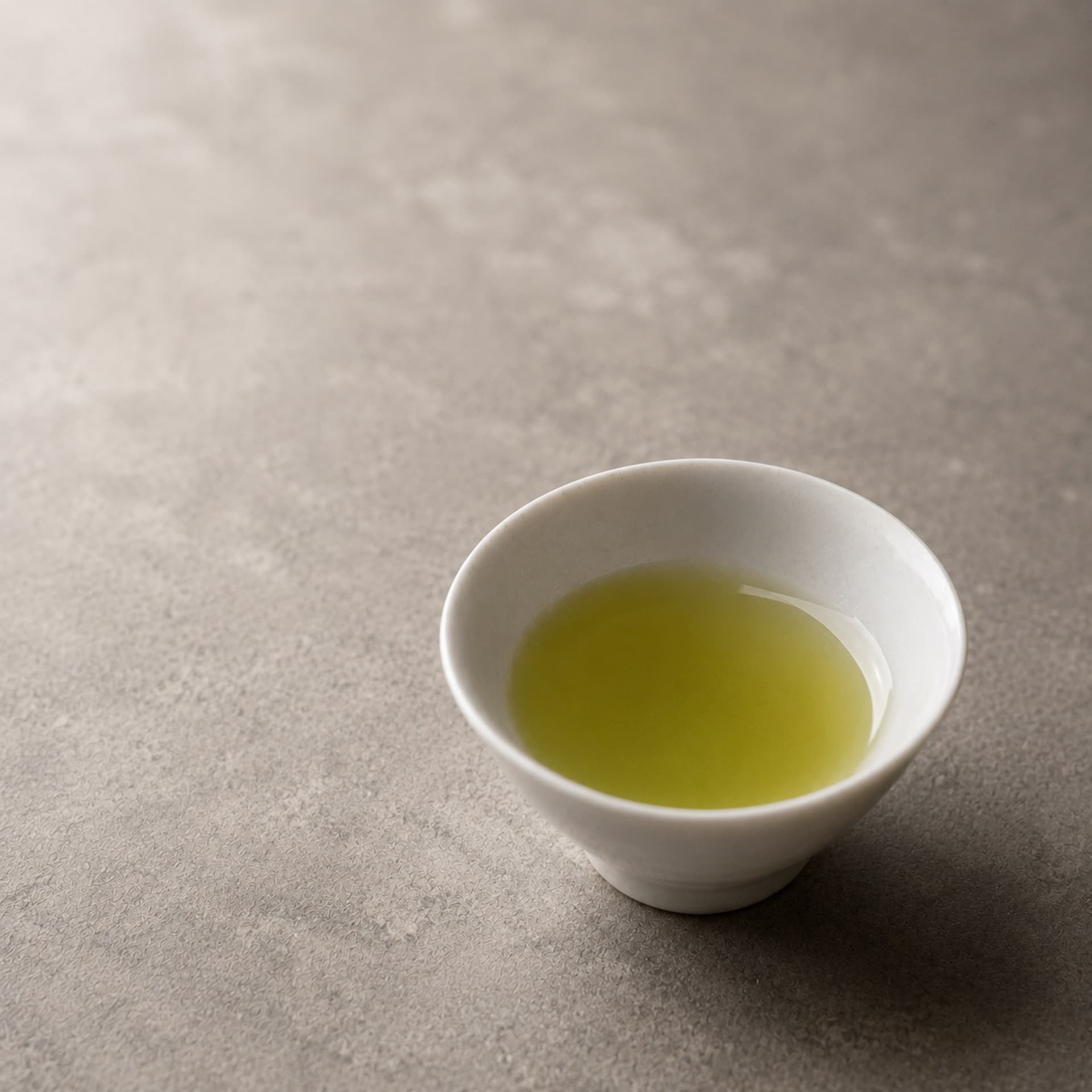
Organic Gyokuro "HI" — Kagoshima Loose-Leaf Gyokuro, 50g · Oosumi Organic Tea Company

Organic gyokuro from the Oosumi region of Kagoshima
説明
A shaded loose-leaf gyokuro from Kagoshima Prefecture, brought to market by the Oosumi Organic Tea Company.
Gyokuro is shaded for several weeks before picking. Held back from direct sun, the leaf retains more of its amino acids instead of converting them to catechins — which is why a well-made gyokuro reads as broth-like and sweet rather than astringent. Kagoshima’s long southern growing season gives this tea a rounder, less austere profile than the Uji gyokuro many buyers meet first.
OOTC is a tea consultancy and brokerage based in Kanoya, Kagoshima. It works with growers of the former Oosumi Province — Kirishima, Kanoya, Kimotsuki and Kumage — and manages tea-leaf quality design. Finishing for HI is carried out at the Kanoya Tea Processing Center of the Kagoshima Kimotsuki Agricultural Cooperative.
Ingredient: organic green tea (有機緑茶). Net content 50 g. Best before two years from production. Store away from heat, humidity and strong odours.
ATJ has reviewed the supplier identity, the product identity and the Japan-origin basis for this listing. Certificate review is pending, and no certification claim is made on this page.
Producer
Oosumi Organic Tea Company
Region
Kagoshima
Product form
Loose leaf · 50 g
Japanese product name
有機玉露「ひ」
What your customer will experience
A gyokuro is judged on what it does in the cup, not on the leaf. Brewed low and slow, this tea gives a concentrated, broth-like sweetness with very little astringency — the quality Japanese buyers call umami — and a clean, lingering finish.
For a specialty retailer it is a teaching product: it explains in one cup why shaded Japanese green tea sits at a different price point. For hospitality and restaurant service it works as a first or final pour, or as a low-temperature service alongside a tasting menu.
Buyer fit
Understanding this category
Gyokuro is not matcha, and not ordinary sencha.
All three come from the same plant. The difference is shade and form. Sencha is grown in full sun and sold as loose leaf. Matcha is shaded, then de-stemmed, de-veined and stone-ground into a powder that is whisked and consumed whole. Gyokuro is shaded like matcha but processed and sold as loose leaf like sencha, and it is infused rather than suspended.
The shading is what a buyer is paying for. Around three weeks under cover slows photosynthesis, so the leaf keeps amino acids instead of converting them into the catechins that read as bitterness. That is why gyokuro tastes sweet and savoury where a sun-grown sencha tastes brisk and grassy.
Tell your customers two things: brew it far cooler than they expect, and expect a small, concentrated serving.
Provenance pathway
Growers of the former Oosumi Province, Kagoshima (Kirishima · Kanoya · Kimotsuki · Kumage) → Oosumi Organic Tea Company, Kanoya (tea-leaf quality design) → finishing at the Kanoya Tea Processing Center, Kagoshima Kimotsuki Agricultural Cooperative → ATJ review → ships from Japan.
OOTC states publicly that its cultivation and production are carried out under the supervision of Shuichiro Sakamoto, a pioneer of organic gyokuro. Recorded as a supplier statement; not separately verified by ATJ for this lot.
Individual growing farms are not yet named at SKU level. Each step above is recorded from supplier confirmation or OOTC’s own public statements. Steps not listed are not claimed.
Ingredients
Organic green tea (有機緑茶).
Single ingredient, as recorded on the current Japanese label basis.
Allergens
Net content
50 g
Shelf life
Two years from production
Storage and handling
Store away from heat, humidity and strong odours.
Best before two years from production.
How to prepare
Use approximately 5 g of leaf per 60–80 ml of water.
Cool the water to roughly 50–60 °C — considerably cooler than for sencha. Infuse for about two minutes, then pour out completely so the leaf is not left standing in water. Second and third infusions may be taken slightly hotter and shorter.
OOTC’s own domestic retail pricing presents this 50 g pack as approximately ten servings, which corresponds to about 5 g per serving. Preparation guidance is general to the gyokuro category and is not a supplier instruction.
Certification
Minimum order (kg per SKU)
1
Lead time (days)
30
Price basis
Price on application — quoted by ATJ after buyer review
Order route
Inquiry through ATJ
Packaging
Carton specification available according to order requirements
Shipping basis
Ships from Japan. Destination and route confirmed by inquiry
What ATJ has reviewed
Last verified
2026-08-04